Introduction
Somalia stands on the frontline of the global climate crisis. Over the past decades the country has experienced severe environmental shocks that continue to exceed its coping capacity. Recurring droughts, destructive flash floods, unpredictable rainfall patterns, and rising temperatures have significantly disrupted livelihoods and weakened already fragile systems.
The United Nations recognizes Somalia as one of the most climate-vulnerable countries in the world. Climate events are no longer occasional disasters. They are part of an ongoing pattern that is reshaping economic activity, increasing displacement, and deepening social and environmental challenges.
Young people are at the center of this reality. More than 70 percent of Somalia’s population is under the age of 30. Despite being the generation most affected by climate impacts, youth have historically had limited opportunities to participate in climate decision making processes. Their experiences, ideas, and solutions have often been absent from national policies and international climate discussions.
At the same time, the scale of the crisis continues to grow. Climate related disasters have displaced more than 2.9 million people across Somalia. Around 6.6 million people face acute food insecurity, largely linked to climate shocks that destroy crops, livestock, and water sources. During the 2023 El Niño floods alone, approximately 1.5 million hectares of farmland were submerged, affecting thousands of farming communities along the country’s river systems.
Climate projections suggest that rainfall may decline by 20 to 30 percent by 2050. This trend will intensify pressure on water resources and grazing land, especially in pastoral and agro pastoral communities. These environmental stresses are also closely linked to social instability and resource-based conflicts.
In this context, empowering youth leadership is essential. Somali young people possess creativity, resilience, and innovation that can help shape sustainable solutions for the future.
The Local Conference of Youth Somalia 2025 (LCOY Somalia 2025) was created to provide a national platform where young people could engage, collaborate, and contribute to climate policy and action.
Organizing Partners
LCOY Somalia 2025 was implemented through a coalition of youth-focused and climate-focused organizations working together to strengthen youth engagement in climate governance.
Key implementing partners included:
- Alliance for Climate and Peace (ACP)
- Climate Resilience and Adaptation Network (CRAN)
- EcoClimate Vision Somalia
- Horn Climate Resilience (HCR)
- Puntland Sustainable Agri-Livestock Network (PUSAN)
- Somali Girls Hope Association (SOGHA)
These organizations worked collaboratively to ensure that the conference represented youth voices from across Somalia.
Objectives of LCOY Somalia 2025
The initiative focused on several interconnected goals designed to strengthen youth participation in climate action.
Strengthening Youth Participation Across Somalia
LCOY Somalia aimed to reach young people from diverse backgrounds including students, pastoralists, young professionals, artists, climate activists, community leaders, and youth with disabilities.
Through decentralized consultations across federal member states, the process ensured that youth from different regions could share their experiences and contribute to national climate discussions.
Connecting Local Youth Voices to Global Climate Platforms
Another important objective was to prepare Somali youth to participate in global climate forums such as the Conference of Youth and the United Nations Climate Change Conferences.
Through training, dialogue, and coordination, the initiative helped ensure that Somali youth perspectives can contribute to international climate negotiations.
Developing a National Youth Climate Statement
A central outcome of the conference was the development of the Somalia National Youth Climate Statement. This document reflects the priorities, concerns, and recommendations of Somali youth and will serve as a reference for national policymakers and international climate discussions
Key Outcomes
LCOY Somalia 2025 produced several important outcomes that strengthen youth engagement in climate action.
Strengthened Collaboration
The initiative brought together government institutions, youth organizations, civil society groups, universities, and international agencies. This collaboration helped establish a foundation for sustained youth participation in national climate governance.
Greater Regional Inclusion
A sub-national LCOY hosted in Garowe, Puntland enabled youth from remote and underserved regions to participate in the national process. This approach ensured balanced representation from across Somalia.
Unified Youth Climate Priorities
By bringing together diverse youth groups, the conference facilitated the creation of a shared national youth climate agenda documented in the Somalia Youth Climate Statement.
Global Youth Representation
Youth delegates trained through the LCOY process are now better prepared to participate in international climate platforms and represent Somalia’s perspectives globally.
Youth Climate Policy Paper
The conference also produced a Youth Climate Policy Paper, which compiles research, consultation findings, and youth recommendations. The document will be shared with government institutions, United Nations agencies, and regional partners to support climate policy development.
Nationwide Youth Engagement
Pre-conference consultations in Hirshabelle and Southwest states helped ensure that the national conference reflected diverse regional experiences and climate realities.
Conference Themes
The themes of LCOY Somalia 2025 were selected through consultations with youth groups, civil society organizations, government institutions, and climate experts. Each theme reflects the most pressing climate challenges facing Somalia today.
1. Youth Inclusion in Climate Policies
This theme focuses on increasing youth participation in national climate frameworks such as the Nationally Determined Contributions, the National Adaptation Plan, and national climate transition strategies.
2. Climate Resilience for Rural Livelihoods
With more than 80 percent of Somalis relying on agriculture and pastoralism, strengthening climate resilience in rural livelihoods is essential for protecting food security and economic stability.
3. Youth Leadership for Climate Justice and Peacebuilding
Climate change contributes to resource conflicts and social instability. This theme highlights the role of youth in promoting peacebuilding, mediation, and sustainable resource management.
4. Climate Finance and Green Innovation
Young people in Somalia face significant barriers in accessing funding for climate initiatives. This theme focuses on supporting youth entrepreneurship, renewable energy projects, and green innovation.
5. Climate Displacement and Migration
Climate shocks have caused large scale displacement across Somalia. This theme addresses safe migration, recovery mechanisms, and advocacy for loss and damage support.
6. Biodiversity and Ecosystem Restoration
Land degradation, deforestation, and biodiversity loss are major challenges. Youth emphasized the importance of ecosystem restoration, reforestation, and protecting indigenous species.
7. Water Security and Flood Management
Water scarcity and flooding are major drivers of displacement and conflict. This theme focuses on improving water governance, irrigation systems, and early warning mechanisms.
8. Climate and Health
Climate change affects both physical and mental health. Youth discussions explored the impacts of heat stress, malnutrition, disease outbreaks, and community well-being.
Building the Road to LCOY Somalia 2025
Preparation for LCOY Somalia 2025 began in early 2025 with a structured planning process that involved youth groups, government institutions, civil society organizations, and international partners.
Government engagement played a key role in shaping the program. The organizing team consulted with the Federal Ministry of Environment and Climate Change, the Ministry of Agriculture and Irrigation, and the Ministry of Youth and Sports, along with several regional ministries.
Civil society organizations and youth networks were also actively involved in program design. These consultations ensured that the conference reflected real community challenges and youth priorities.
Youth Engagement Through Webinars
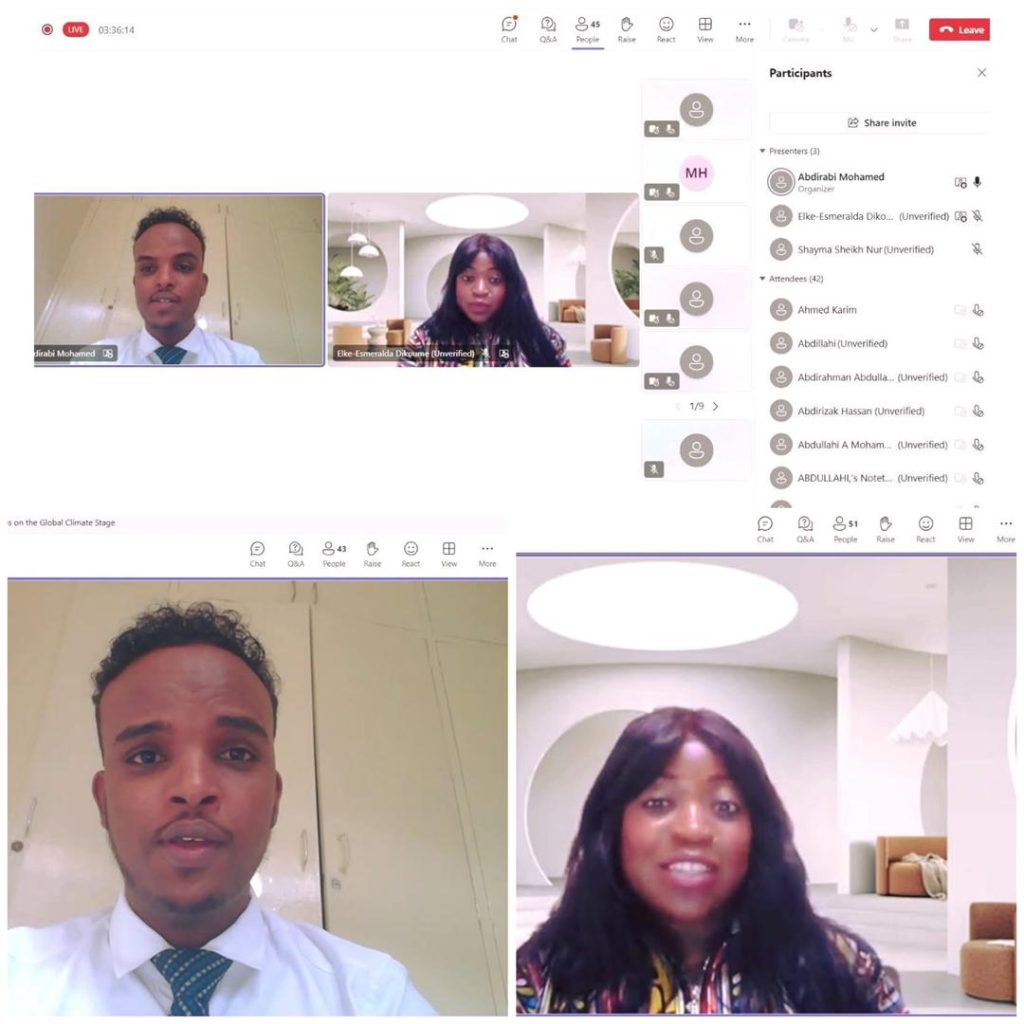
To build momentum ahead of the conference, the organizing team hosted two national webinars.
The first session introduced the LCOY process and highlighted the importance of youth participation in climate policy. More than 500 young people from across Somalia attended.
The second webinar focused on the delegate application process and opportunities for engagement before and after the conference. This session reached more than 700 participants nationwide.
Regional Pre-LCOY Consultations
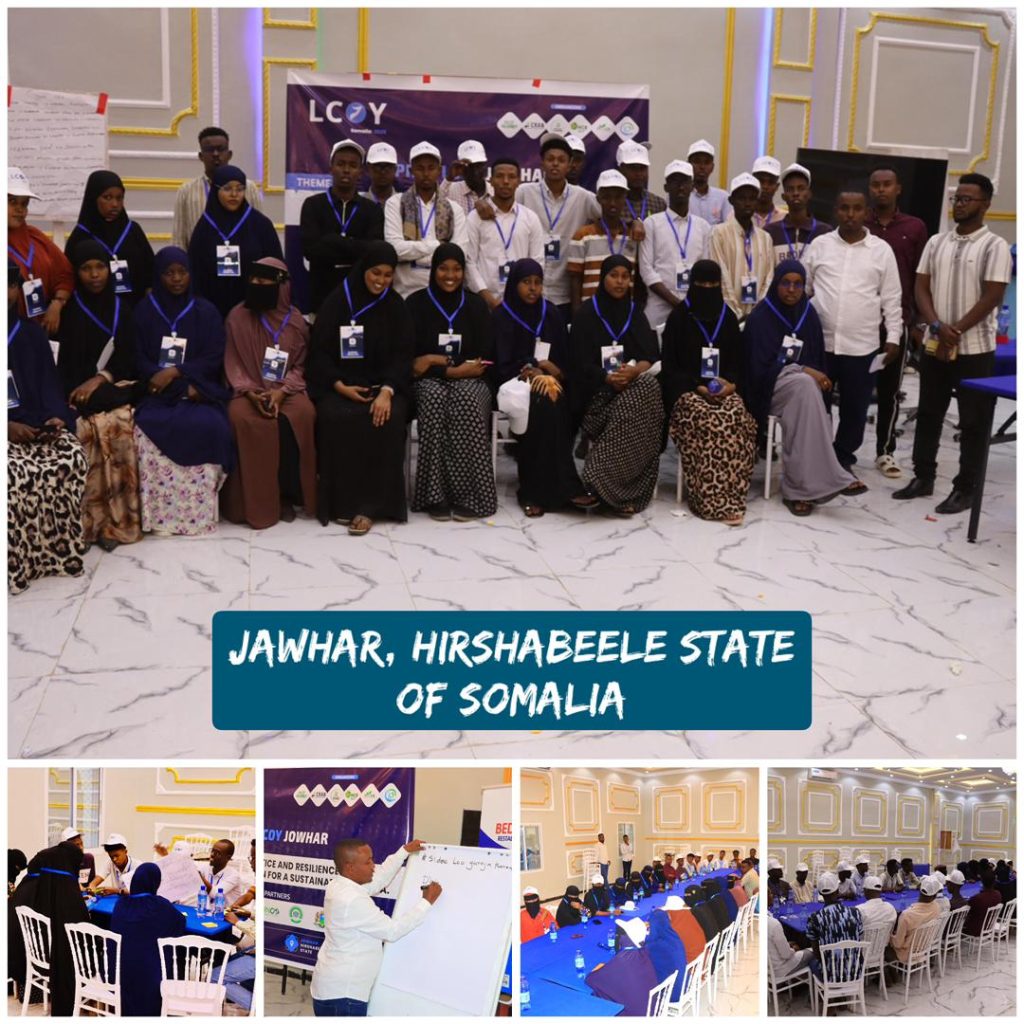
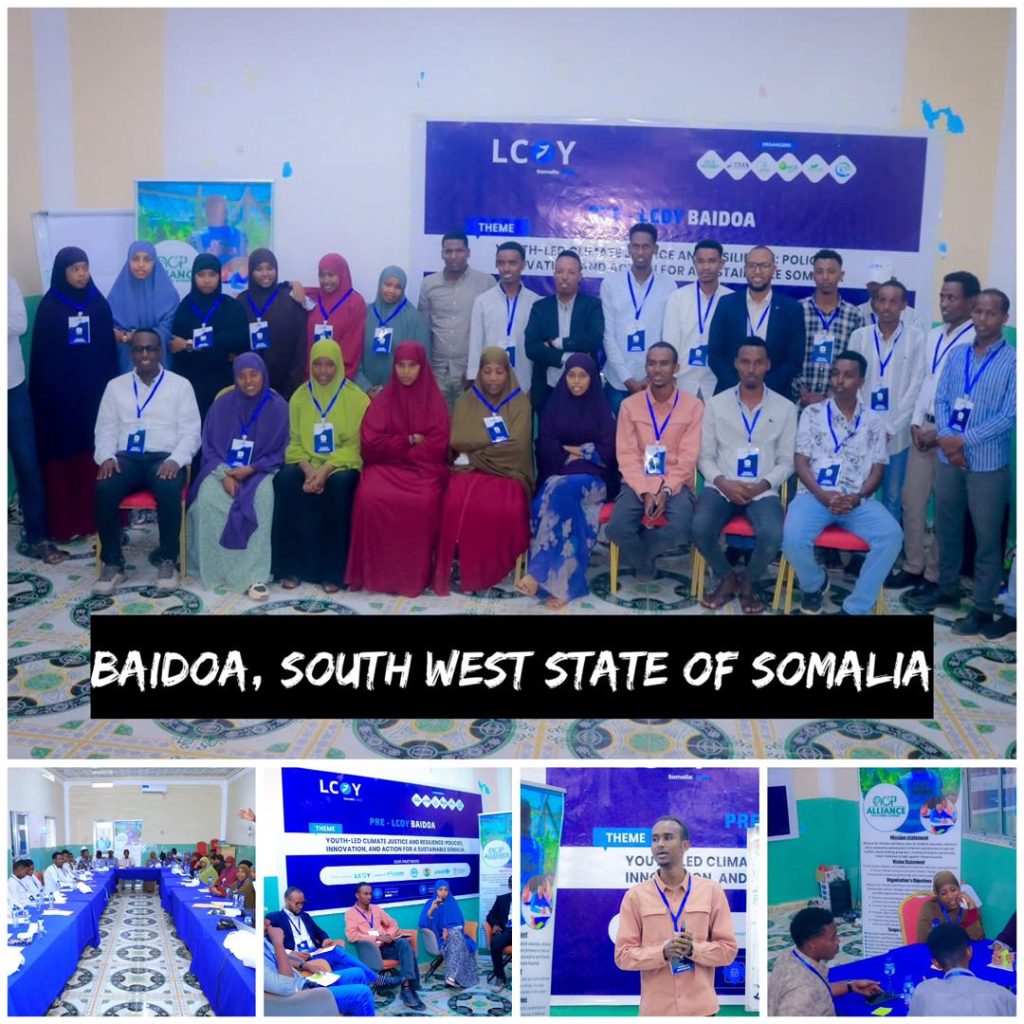
In October 2025 regional consultations were held in Baidoa and Jowhar to gather local perspectives and climate priorities.
Each consultation included 50 participants with equal representation of women and men. Youth activists, university students, and community leaders participated in discussions about drought resilience, water access, ecosystem degradation, and climate displacement.
These insights helped shape the national conference program and contributed directly to the development of the National Youth Statement.
Sub-National LCOY in Puntland
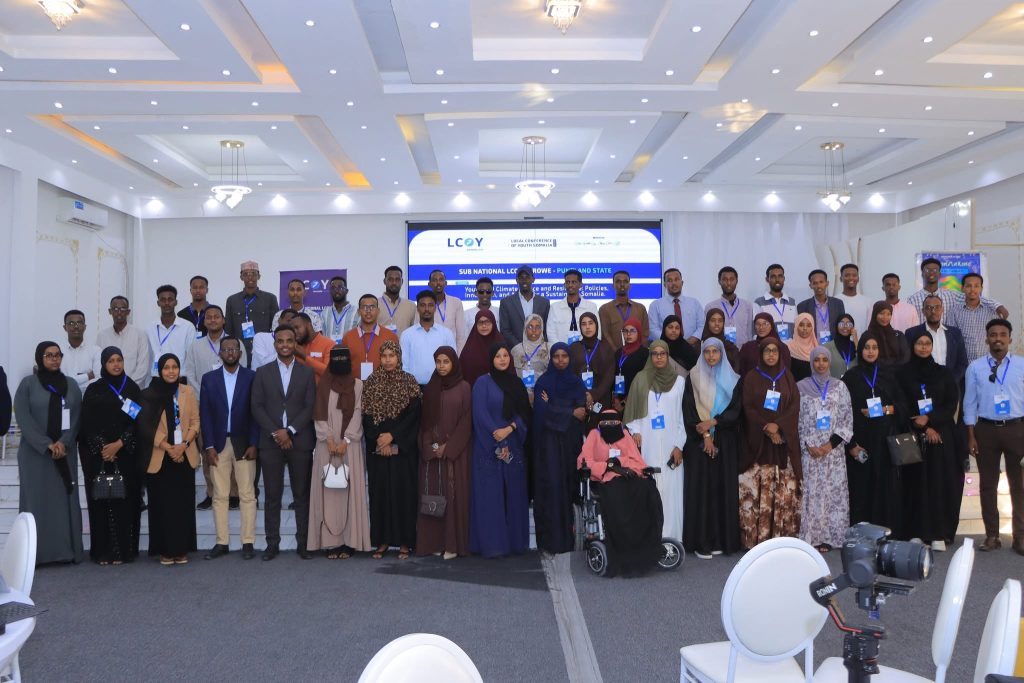
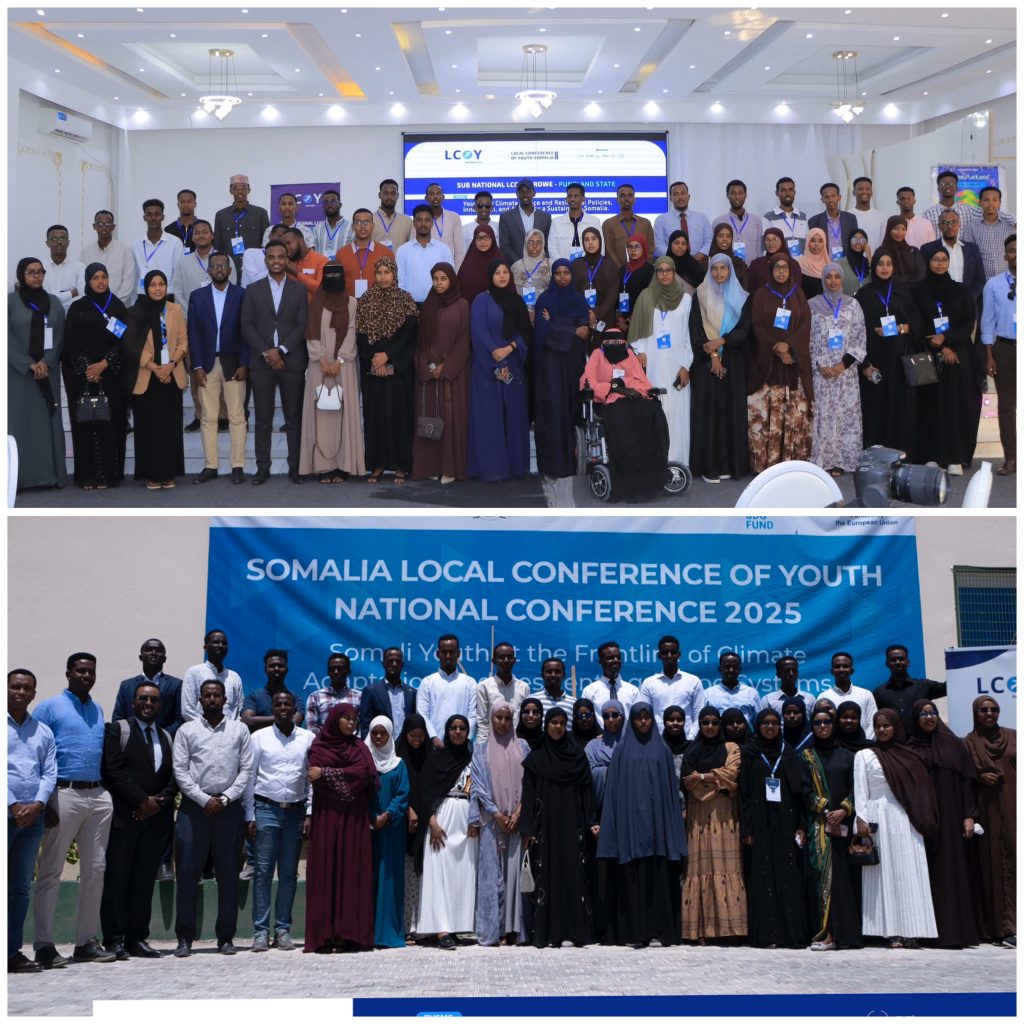
A sub-national LCOY was held in Garowe, Puntland, bringing together 120 youth participants. The event was opened by the Puntland Minister of Environment and Climate Change and included participation from several government ministries, international organizations, and local NGOs.
The program featured keynote speeches, youth storytelling sessions, panel discussions, and group workshops focused on regional climate priorities.
Participants worked together to develop policy recommendations that were later integrated into the national youth statement.
National LCOY Somalia 2025
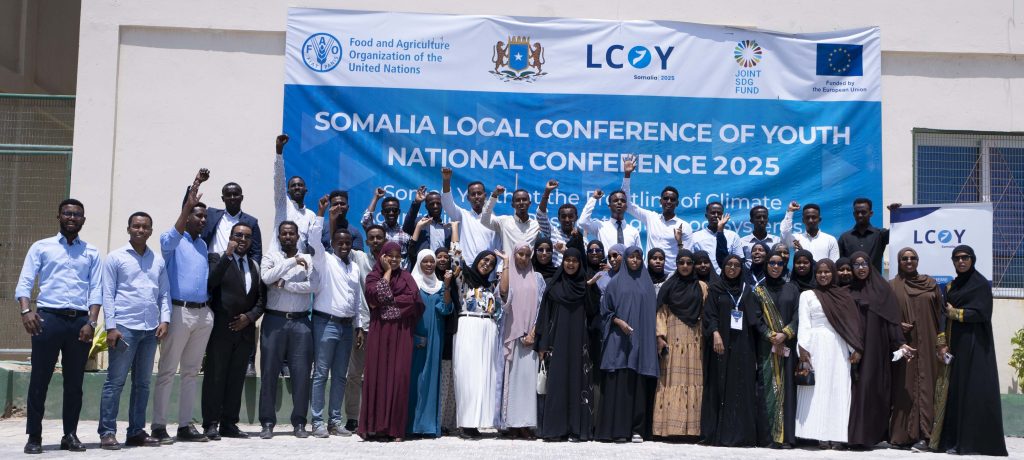
The National Local Conference of Youth Somalia 2025 took place on 22 and 23 October 2025 in Mogadishu.
The conference gathered 200 youth delegates from all Federal Member States, ensuring strong regional representation and gender balance.
Government officials, civil society organizations, universities, international NGOs, and United Nations agencies also participated.
The first day focused on high level discussions and expert panels exploring Somalia’s climate challenges and opportunities for youth leadership.
The second day focused on collaborative consultations where youth delegates worked together to draft the Somalia National Youth Climate Statement 2025.
The event also included exhibitions showcasing youth innovations in renewable energy, sustainable agriculture, environmental conservation, and digital climate solutions.
Logistics and Coordination
All in-person events were carefully organized to ensure safety, accessibility, and comfort for participants.
Venues were selected in secure and central locations in Mogadishu, Garowe, Baidoa, and Jowhar. Transportation and accommodation were arranged for participants traveling from other regions.
Online activities such as preparatory webinars were hosted on Microsoft Teams and Google Meet to ensure nationwide participation.
Partnerships and Support
The success of LCOY Somalia 2025 was made possible through strong collaboration with government institutions, international organizations, and development partners.
Key institutional partners included:
- Ministry of Environment and Climate Change
- Ministry of Youth and Sports
- UNICEF Somalia
- FAO Somalia
- GREDO Somalia
UNICEF Somalia served as the main donor and technical partner. FAO Somalia provided financial and technical support on climate resilient agriculture, while GREDO Somalia contributed logistical and operational support.
Accessibility and Inclusivity
Inclusivity was a guiding principle throughout the conference process.
The organizing coalition included both women-led and men-led organizations to ensure gender balanced leadership. Female staff and volunteers played major roles in program coordination, communications, and facilitation.
Participants included youth with disabilities, women leaders, minority communities, and youth from underrepresented regions.
The Deaf community also actively participated and showcased sign language communication during the main conference.
Achievements and Impact
LCOY Somalia 2025 successfully achieved its primary objectives.
Pre-conference consultations, the sub-national conference, and the national conference were all implemented successfully. Youth engagement increased significantly, and the initiative created a strong platform for youth participation in climate policymaking.
The Somalia National Youth Climate Statement and the Youth Climate Policy Paper now serve as key reference documents for future climate advocacy and policy development.
One goal that could not be fully achieved was supporting youth delegates to attend COP30 due to funding limitations.
Looking Ahead
The experience of organizing LCOY Somalia 2025 highlights the importance of investing in youth leadership and inclusive climate dialogue.
Future LCOY initiatives in Somalia can build on this foundation by strengthening partnerships, securing sustainable funding, and ensuring that Somali youth continue to contribute to national and global climate action.
Empowering young people today will help shape a more resilient, peaceful, and sustainable Somalia tomorrow.